
Can the Right Pillow Fix Your Neck Pain? Here's What the Science Says
Neck pain affects a huge chunk of the population at some point in their lives, and a surprising amount of research has gone into figuring out whether the thing under your head at night is actually part of the problem.
We dug into three studies spanning nearly three decades, from a classic 1997 clinical trial to a 2021 meta-analysis pooling data from hundreds of participants, to see what actually holds up.
The short answer: Pillows do seem to matter, but not always in the way marketing copy suggests, and the details are more interesting than "buy the most expensive and your pain will vanish."
When you buy with our links, we may earn a commission. See how we work with brands here.
The Big Picture: What Happens When You Pool the Evidence
The most convincing place to start is a 2021 systematic review and meta-analysis that did the unglamorous but valuable work of gathering up every decent clinical trial on pillows and neck pain it could find. The researchers combed through six major research databases and initially turned up 35 studies. After filtering for quality, they zeroed in on nine well-designed trials covering 555 people with chronic neck pain.
Here's what they found: pillows made from rubber (latex) or featuring spring/coil support systems were genuinely better than other options at reducing neck pain, easing the pain people woke up with in the morning, and lowering overall neck-related disability. The improvements weren't massive, but they were statistically real, and importantly, people also reported being more satisfied with these pillows compared to what they'd been using before. That satisfaction boost was actually the strongest effect in the whole analysis.
Now for the part that might surprise you: despite all that improvement in pain and satisfaction, the type of pillow didn't meaningfully change how well people actually slept, at least not according to standard sleep quality questionnaires. And it didn't produce any dramatic, measurable shift in spinal alignment either.
In other words, a good pillow can make your neck hurt less and make you happier with your sleep setup, without necessarily changing the numbers on a formal sleep quality scale. That's a useful distinction: pain relief and "better sleep" aren't automatically the same outcome, even though we tend to lump them together.

Why One-Size-Fits-All Pillows Were Probably Never Going to Work
The second study takes a step back from clinical trials and asks a more basic engineering question: what should a pillow's shape actually look like, given how people really sleep? Researchers first watched 40 people sleep and tracked their positions throughout the night. The finding here alone explains a lot about why so many of us wake up uncomfortable: people switch between lying on their back and lying on their side roughly 24 times over the course of a single night. That's not an occasional shift, that's constant movement.
The problem is that a single fixed pillow height can't serve both positions well. When you're lying on your back, you need relatively little height under your head to keep your neck in a neutral line. When you roll onto your side, you suddenly need a lot more height to fill the gap between your ear and your shoulder, otherwise your neck bends downward toward the mattress all night.
The researchers measured people's actual head, neck, and shoulder dimensions and confirmed that the ideal pillow height for back sleeping and the ideal height for side sleeping are simply different numbers for most people.
Their solution was to design a pillow shaped like a shallow "U": lower and flatter through the center for when you're on your back, with built-up, higher sides for when you roll onto your shoulder. When they tested this shape-optimized pillow against a standard one with a small group of sleepers, the custom design produced significantly better sleep quality ratings.
It's a small study, so treat the exact numbers with some caution, but the underlying logic is hard to argue with: since your body doesn't stay in one position all night, your pillow probably shouldn't be built for only one position either.

The Classic Experiment: Water, Rolls, and What Actually Helped
The oldest of the three papers is also, in some ways, the most rigorous, since it's a genuine randomized controlled trial rather than an observational study.
Back in 1997, researchers at Johns Hopkins recruited 41 people dealing with ongoing neck pain and put them through a five-week crossover experiment. Everyone started on their own regular pillow for a week as a baseline, then spent two weeks on a neck-roll pillow and two weeks on a water-based pillow, in random order, while researchers tracked their pain levels, sleep quality, and disability scores the whole way through.
The water pillow won, and it wasn't close. People reported statistically significant improvements in pain intensity, pain relief, sleep quality, and disability scores compared to both their usual pillow and the roll pillow. Most participants said they actually preferred it over what they'd been sleeping on before the study even started.
The roll pillow, on the other hand, had a rough time. A notable number of participants found it genuinely difficult to sleep on, and the researchers noted it tended to push the neck into an extended, tilted-back position rather than keeping it neutral, which is likely why people struggled with it.
The theory behind why the water pillow performed better is fairly intuitive once you hear it: water shifts and redistributes as you move, so it continuously reshapes itself to match the contour of your head and neck rather than forcing your neck to conform to a fixed shape. It's the same underlying idea as the U-shaped pillow from the second study, just solved with fluid dynamics instead of foam geometry.
One important asterisk: this study was funded by the company that made the water pillow being tested. That doesn't mean the results are wrong — the effect sizes were real and statistically significant — but it's the kind of funding relationship that's worth knowing about before treating the finding as the final word.

So What Does This Actually Mean for Your Pillow Shopping?
Put these three pieces of research together and a pattern starts to emerge that's less about brand names and more about basic mechanics. The clearest, most consistently supported idea across all three papers is that adaptability matters.
Whether that adaptability comes from a naturally responsive material like latex or water, or from a shape deliberately engineered to handle both back and side sleeping, pillows that can adjust to your changing position throughout the night tend to outperform pillows that force your neck into one static shape.
The rubber and spring pillows in the meta-analysis, the custom-contoured U-shaped design, and the water pillow in the 1997 trial are three very different products, but they share that same underlying trait. Meanwhile, rigid, fixed-shape designs like the neck roll performed worse, sometimes uncomfortably so.
None of this means you need to run out and buy a water pillow specifically — the research here is limited, sample sizes are modest, and pillow science overall is a smaller, less-funded field than you might expect given how universal the problem is. But if you're shopping for something to help with neck pain, the research suggests it's worth prioritizing a pillow that can genuinely respond to your body and your sleep position, rather than one that locks your neck into a single, fixed angle for eight hours a night.
Related guides
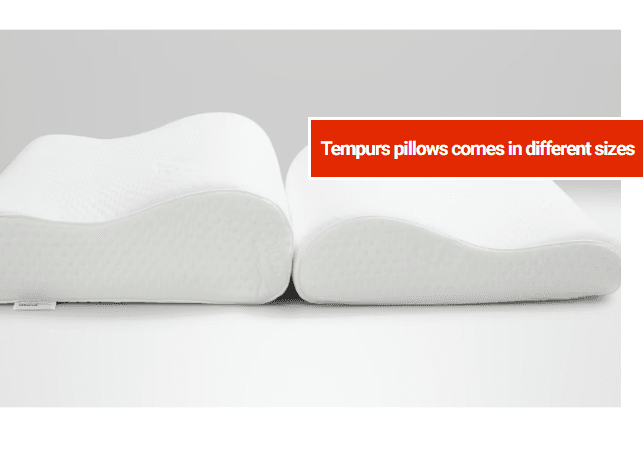
The Best Pillow for Neck Pain: Our Top 3 Picks (2026)
There are myriads of magazine articles and blog posts claiming that this is the best pillow for neck pain. However, it is hard to separate useful reviews from paid marketing online, especially in this space. That's why the Side Sleeper Guide team does its own research. When we checked out three of the pillows that get recommended the...
Read guide
Science Has Spoken: 7 Facts You Didn't Know About Sleep Quality
Your sleeping position isn't just a matter of comfort—it's basically a biological clock. Research shows why choosing the right mattress and pillow get more important as we age.
Read guide
Best Pillows for Shoulder Pain: 7 Research-Based Picks
If you wake up massaging your own shoulder before you've even opened your eyes, the problem probably isn't your mattress. It's the pillow. A flat or overstuffed pillow leaves a gap between your ear and your shoulder that your neck has to bridge all night, and your shoulder pays the toll. The best pillow for shoulder pain fills that gap...
Read guide
The Three Best Pillows for Side Sleepers: Pros and Cons
There are lots and lots of blog posts and articles on what's supposed to be the best pillow for side sleepers. The problem is that it's hard to separate useful reviews from paid marketing in this space. That's why the Side Sleeper Guide team does its own research. When we checked out three of the pillows that get recommended the most, we...
Read guide